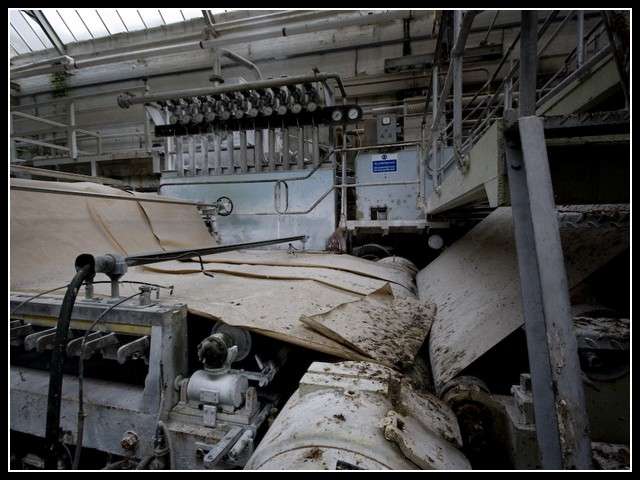
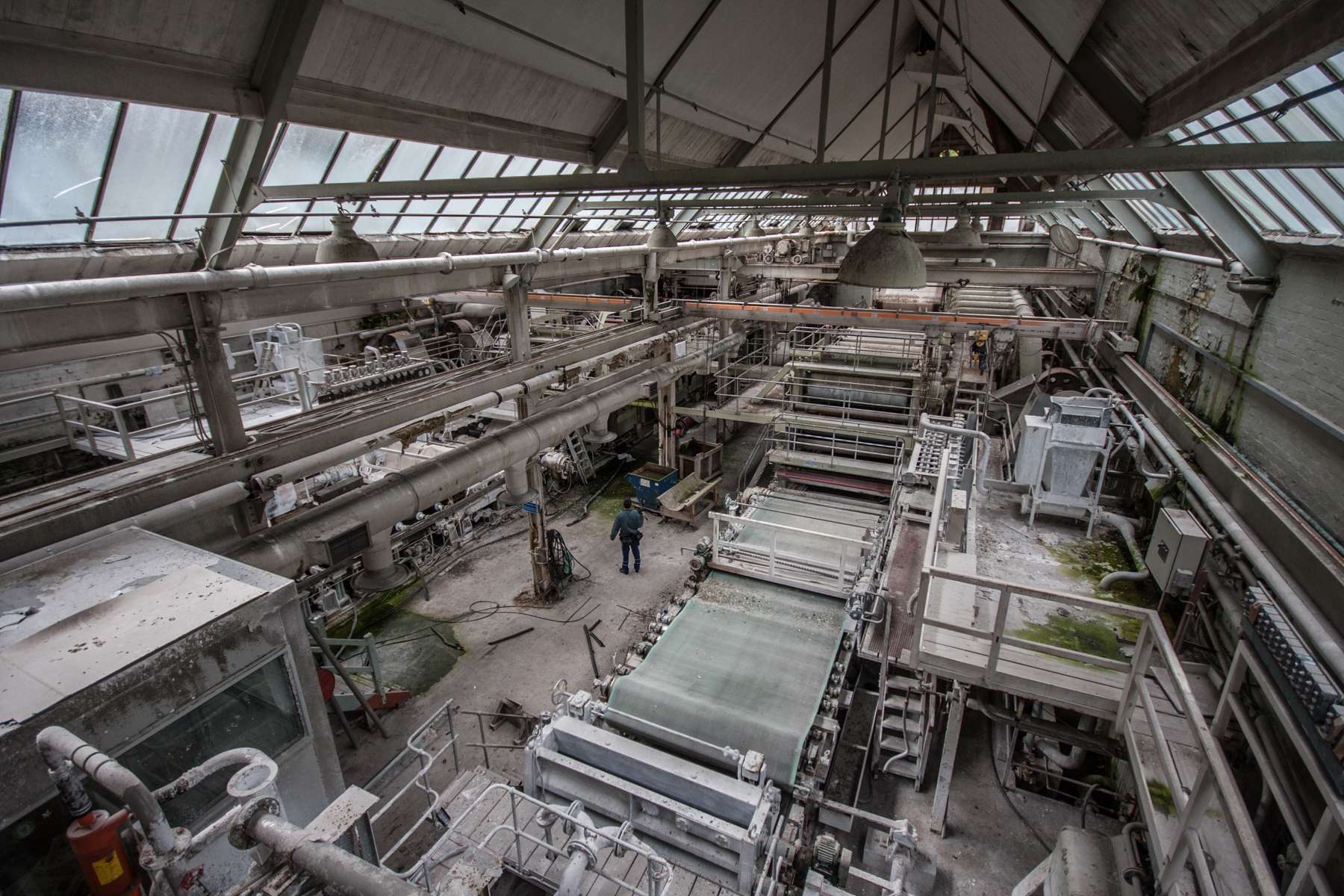
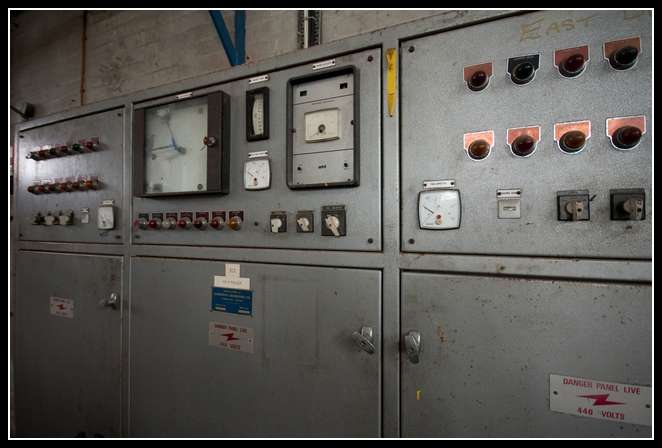
Sometimes refereed to as ‘Fletchers mill’ or ‘Fletchers Paper Mill’ this mill sits tucked away in the valleys of east Oldham as if one day they walked out of the factory and never returned. Infact this probably wasn’t far from the truth. An unbelievable explore.
History of the company (September 1964)
The beginnings of the firm of Robert Fletcher & Son Limited are lost in the mist of time. It is probably that it was one of the first concerns which the industrial revolution brought to this part or Lancashire. It is know that the firm was first owned by a family called Crompton. They traded under the name of Ralph Crompton and Nephews, Bleachers and Papermakers, Stoneclough and Manchester. The influence of the bleaching side of the business is traceable in some of tte terms still in use in the mill. Paper was first made at Stoneclough in 1829.
Robert Fletcher entered the firm as a young man in his twenties in the year 1830. His ability brought him to the notice of his employers and he became manager of the bleaching department and later manager of the whole mill. The Crompton family held him in high regard and Roger Crompton, the last of the brothers, left him both the principal trusteeship and the option of succeeding him in the firm.
After the death of Roger Crompton, Robert Fletcher controlled the business with conspicuous ability and integrity for many years. He died at Vale House, Stoneclough, on May 17th, 1865, and was succeeded by his sons John and James Fletcher. They in turn were followed by their sons, John Robert Fletcher and James Fletcher, who are well remembered by many old employees today.
In 1897, the firm was incorporated as a Limited Company. Many things have changed since those days. The Company then employed about two hundred people; now the number including Greenfield Mill, is about one thousand. The top wage in those days was 6½d. an hour. There were 7 paper machines which between them produced only a fraction of the paper which three paper machines produce today.
Throughout the succeeding years, the firm continued to expand and to increase its volume of business. A relation for high quality, reliability and fine craftsmanship was steadily built up.
A second mill, at Greenfield, near Oldham, was opened in 1921. This mill specialises in the manufacture of cigarette paper. There are also sales offices in London & Manchester and agencies in many foreign countries. The Company owns several hundred of acres of land around Greenfield Mill, which supports a mixed farm.
The company’s products cover a wide range of fine tissues; in this field, Robert Fletcher & Son Limited has a world-wide reputation for quality, reliability and good service to the customer which is founded upon more than a hundred years of experience.
Financial Strain & Eventual Closure
Towards the late 90’s the two mills of Robert Fletcher & Son Ltd started to struggle. The increased cost of wood pulp and energy combined to make it tough financially. In 1997 the greenfield site had a turnover of nearly £17m and shareholder funds exceeded £9m. By 1999 turnover was down to £8.2m and the shareholders funds had dwindled to little over £4m. In 2000 in an effort to save the business going to the wall resulted in the closure of the Stoneclough site and 120 job losses resulted from the closure although 50 new jobs would be created at the Greenfield site. Despite this move the company continued to spiral into financial ruin and in July 2001 several suppliers and creditors formally applied to wind up the company and resulted in the closure, overnight, of the Greenfield site.
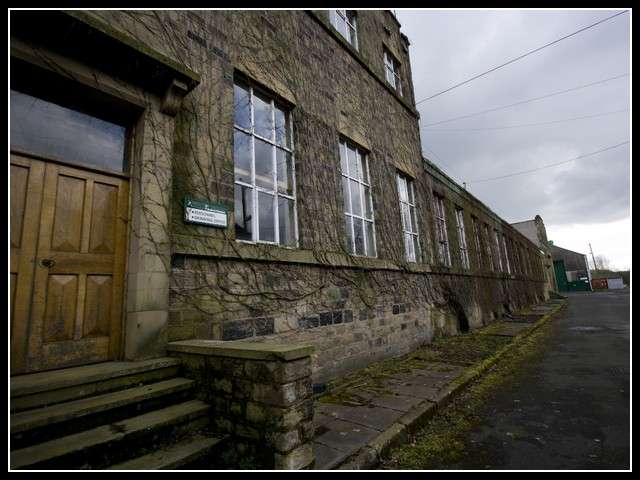
No. Yes it was back then. Is it now? Not at all, security is extremely tight these days and security do actually move outside of there cabin at the front these days!
Did you enter the buildings without permission? & if so was it easily accesible?
I am enquiring about a B. Steele who worked at Robert Fletcher & Son Ltd, Stoneclough, he was awarded a inscribed gold watch in 1968 for 25 years service. I am assuming B. Steele is a man as the watch is a gents watch.
My interest is solely that I now own this watch and I would be fascinated to know more about B. Steele, the original owner. Any information would be much appreciated and my email address is:- kav211202@aol.com
Thank you.
I am making this inquiry for my uncle who is 86, he has lost his memory and lost his pension The only information we have is he worked at Fletchers and paid into a private pension He moved into a nursing home without informing the pension company of his new address. We cannot find any record of his pension because some yes man from the council put all his private papers into the dustbin, all we need is the name of the pension fund the employees paid into at fletchers. Any help would be greatly appreciated, my email address is: t_lees@hotmail.com
my grandad Wilf Piper worked at kearsley for many years, does anyone remember him?
Myself and my husband used to work for this mill, my husband right up to the day it shut down, he turned up for work (6-2 shift) and was told to go home and if you wish to claim redundancy speak to the government as we Fletcher’s would not be paying it!
Having said that, all of the above comments are true, the mill had a great community about it, I dont ever remember getting up to go to work thinking to myself “I wish I didn’t have to go”, I loved everyday that I work there. It really does break my heart to see the place in the state that is now in and I believe this is the feeling of a lot of other local ex employees
A good few years ago I used to cut the grass and keep the garden tidy at a cottage on Anglesey North Wales for a couple Nigel and Anne Plackett – did they have anything to do with this mill? I seem to recall them saying a few times he worked there. If indeed they are still about I would like to hear from them.
John
jcliftics@msn.com
Hi, I currently live in one of the houses (Ley Butts) near the site of Greenfield paper mill, where I believe, ex-employees of the mill used to live. When I talk to the people that used to work in the mill, who have lived in Greenfield for years, they always comment how there was a great community when the mill was open. There was a social club with tennis courts and a bowling green and the football field, it was a thriving community.
Unfortunately, it has all been left empty to deteriorate. I have applied to the current owners to see if they would allow the community/social club on the old mill road to be re-opened and run by a committee of locals from Greenfield. It is something that would bring a community that once was, back to life again. I know the mill is no longer, but the club could be put to great use. Does anyone who is familiar with the area agree? Would anyone be interested in forming a committee if the permission to reopen is granted???
Sarah
csarah523@hotmail.com
I am retired now and live in the USA in Connecticut. Around 30 years ago I was National Sales Manager for the Black-Clawson Company in Fulton, New York. Two people from Fletcher’s Kearsley Paper Works came to Fulton to run lab tests. They were W. Ian Porteous, Director/General Manager and W.Ken Allen, Research & Development. I came upon their calling cards in a file today. It brought back memories of two individuals I considered to be among the finest gentlemen I have met. We had dinner and great conversation one evening and I was grateful for their visit. The experience validates the expression “It’s not the destination that counts, it’s the journey”. Should Mssrs Porteous or Allen still be amongst us, and learn of this commentary, it would be my pleasure to hear from them.
Daniel Ticson
email: joyce.ticson@cox.net
It closed down in July 2001. It went bust at lunchtime and the members of staff were given bags to pack their stuff and leave. Most just left assuming it would reopen. The best description I can give is that it’s like the fire alarm went off mid shift and nobody ever returned. There are many tales of what happened to the company, it was very cash rich early to mid 80′s and then lost huge amounts of its reserves. The buildings have remained in an almost mothballed status for the years since. Recently it was used on a Warburton’s advert, you may notice a few of my externals towards the end of the advert.
Recent rumours hint that demo is soon on the horizon.
When did this mill close down? what happened to the mill? company bankrupt?
Thanks for the comment and history.. it really does have quite a tale to tell this place!
I worked at Fletchers back in the 80s as a slitter’s assistant – cutting the large rolls of paper into wheels for shipping to cigarette firms. The people who worked there, on the shop floor, were on the whole brilliant. Hard working men and women who were treated like scum by the management. Our lunch we ate in the toilets, cos we could smoke in there. Later they provided us with a battered old, cold portacabin to eat in. They also had a policy of “No union” and “No blacks”. It was hard, poorly-paid work. Most, under duress, worked six days a week. Some, now and then, did seven. The shifts changed each week. 10am-6pm/6pm-2am/2am-10am and on, and on. Mental stuff. Lovely setting though. In the valley with the trees, the river and the bowling greens, etc. – a throwback to older mill days when the patronage of mill owners could at least on occasion offer some care and respite to its grafting workers. That soon disappeared though, and all the owners then cared about was not the welfare of their men and women, but purely profits. Of which they obviously ended up sorely lacking, going off the massive unpaid bills that haunt the derelict building, along with the silence of dead machinery that once unrelentingly turned and mashed and rumbled for 24 hours a day, seven days a week.
My father worked at Fletchers for 40 years and I still have his Gold watch presented to him on his early retirement due to lung problems after working with the beaters and stench of Chlorine gas. Iworked for a nearby haulage firm and shipped tons of paper to the docks etc. The main concern for most who lost their jobs is the pension funds. It vanished with the new owner. He did a Maxwell!